Surfing in Queensland
Surfing guide to Queensland, Australia
Queensland has 2 main surf areas. There are 32 surf spots and 4 surf holidays. Go explore!


Overview of surfing in Queensland
Overview of surfing in Queensland

Queensland is one of Australia’s most legendary surf destinations, famous for its long point breaks, warm water, year-round sunshine, and easy-going surf culture. Stretching from the New South Wales border all the way up to the edge of the Great Barrier Reef, the Queensland coastline offers a full spectrum of waves — from world-class point breaks like Snapper Rocks and Noosa. Noosa to mellow longboard rollers, open beaches, cyclone-powered barrels, and rare tropical setups that light up during specific swell events.
We acknowledge the traditional owners of the land throughout Queensland, whose enduring connection to country, language, and culture continues to shape the region.
The southern half of the state — especially the Gold Coast and Sunshine Coast — is where most of the iconic surf action happens. Queensland is home to Brisbane, the largest city in the state, with a sprawling urban area that extends along the river and encompasses diverse suburbs and parks. These regions have consistent waves, organised surf communities, diverse surf towns, and a laid-back lifestyle that defines modern Australian surf culture. Warm water almost year-round means thinner wetsuits, long sessions, and cruisy dawn patrols.
Further north, the surf becomes more seasonal, more unpredictable, and more novelty-driven. Once you get above Fraser Island, reefs begin to block swell, leaving only rare cyclone systems, river-mouth pulses, and wind-swell windows. But even there, Queensland still surprises with hidden breaks, perfect sandbanks, and empty tropical rights that appear only a few weeks each year.
Whether you’re hunting perfection at the Superbank, logging at Noosa’s long peeling points, cruising the Sunshine Coast beaches, or waiting for tropical cyclone swells in the far north, Queensland is one of Australia’s most loved surf zones — warm, sunny, beautiful, friendly, and packed with waves.
Surf Regions in Queensland: Gold Coast and Beyond
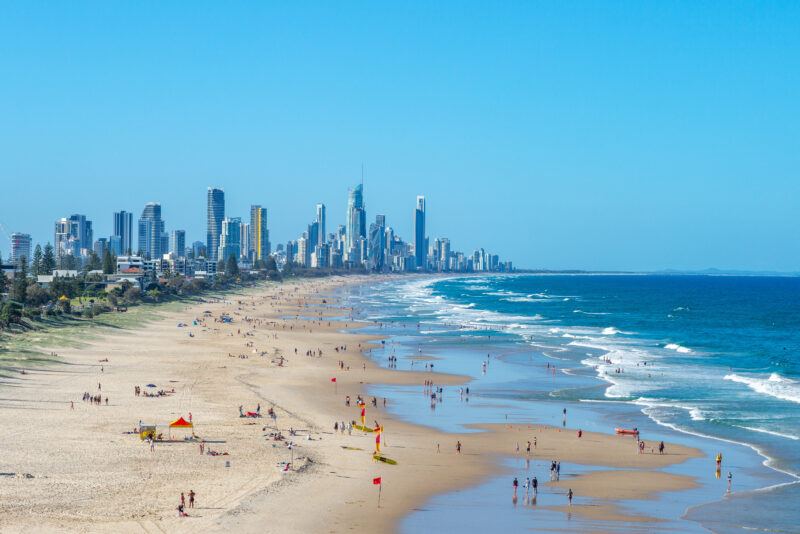
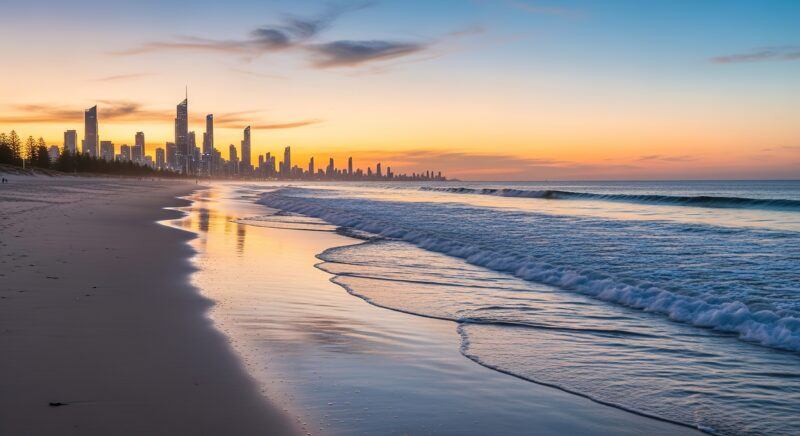
Australia’s high-performance surf capital. Home to some of the best right-hand point breaks in the world, including Snapper Rocks, Rainbow Bay, Greenmount, Kirra, and Burleigh Heads. Fast, hollow, consistent waves with world-class talent everywhere. Surf infrastructure is unmatched. The Gold Coast region covers approximately 540 sq mi, stretching from the coastline into the south west hinterland.
The Sunshine Coast
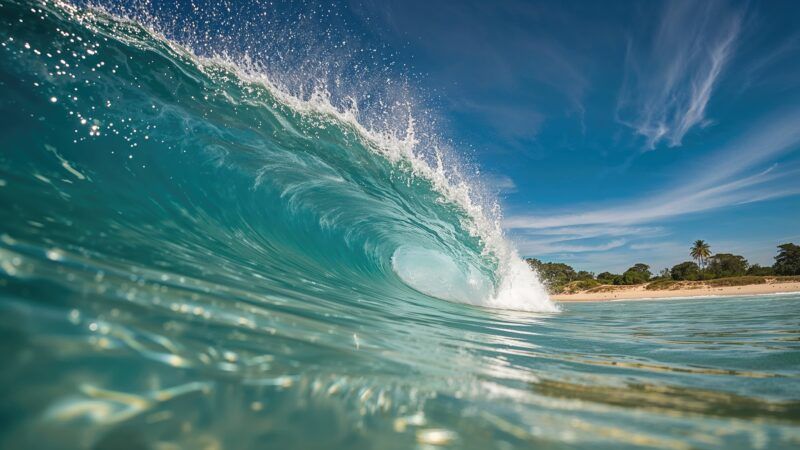
A mellow, scenic, and incredibly diverse coastline with long points, beach breaks, reef setups, and beginner-friendly bays. Noosa is the star, but the whole region offers fun waves from Caloundra to Double Island Point. The surfable coastline extends inland to the south west, reaching the edge of the hinterland.
Fraser Coast
Fraser Island and Hervey Bay are swell-shadowed for most of the year, but cyclone swells and unique angles create random windows of perfection. Double Island Point is accessible from here, offering one of the world’s longest sand-bottom rides when it fires. Moreton Bay, located to the south, is a significant geographic feature that influences the region’s swell patterns.
Central Queensland
Yeppoon, Emu Park, and Keppel Bay offer occasional surf during strong northern swells or tropical systems. Mostly a wind-swell region but has hidden sandbars and points that surprise locals every year.
North Queensland
From Townsville to Cairns, the Great Barrier Reef blocks almost all ocean swell, but cyclone surf and heavy wind-swell events create ultra-rare waves. Mission Beach, Hinchinbrook, and Magnetic Island all have novelty setups. Tropical, warm, empty, unpredictable.
Far North Queensland (FNQ)
Cape Tribulation, Cooktown, Weipa — these zones are more about adventure than wave count. Rare, beautiful, untouched waves appear a few times a year when cyclones form. Crocs, stingers, and remoteness mean these waves are for the brave and experienced.
These surf regions often align with local government areas, which define the administrative boundaries and management of each coastal zone.
Getting there
Getting There and Access via Brisbane Airport
Brisbane Airport is a major international and domestic gateway for surfers traveling to Queensland, providing easy access to both the Gold Coast and Sunshine Coast.
Gold Coast: Fly into Coolangatta Airport — 5 minutes from Snapper Rocks.
Sunshine Coast: Fly into Sunshine Coast Airport — 25–40 minutes to Noosa/ Caloundra.
Fraser Coast: Drive from Brisbane or Sunshine Coast; 4WD needed for many areas.
Central & North QLD: Fly into Rockhampton, Townsville, Cairns depending on the region.
Car hire is essential for surf exploration. National park access often requires 4WD, especially around Noosa National Park, Double Island Point, or Fraser Island.
Crowds
Gold Coast = heavy crowds year-round.
Sunshine Coast = busy during holidays but manageable.
Noosa = extremely crowded on good days.
Fraser Coast + Central QLD = empty most of the year.
North QLD = surf is rare, but when it happens, expect a few keen locals.
Lineup Lowdown
Gold Coast lineups are fast-paced, competitive, and full of high-level surfers. Respect is huge — don’t snake, don’t back-paddle, and always give groms space. Sunshine Coast is more mellow, especially around the beach breaks. Noosa requires patience and kindness — it’s a longboard-heavy zone with mixed levels.
Surf seasons and when to go
The best time of the year to surf in Queensland
Surf Seasons and When to Go
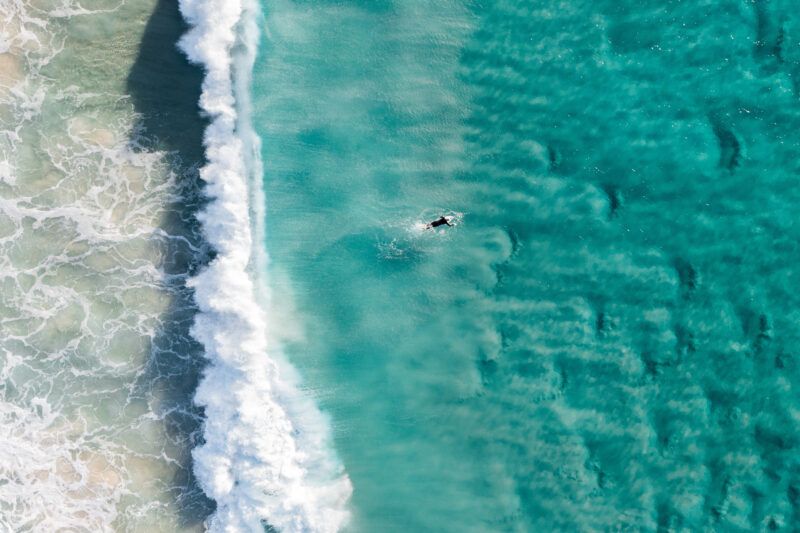
Summer (Dec–Feb):
Cyclone season. The best chance for world-class, long-period east swells. Hot, humid, lots of storms.
Autumn (Mar–May):
Clean mornings, consistent swell, offshore winds, warm water — arguably the best season for both Gold Coast and Sunshine Coast.
Winter (Jun–Aug):
Cooler air, but still warm water. Strong southerly swells, crisp offshore winds, great for points and beaches.
Spring (Sep–Nov):
Smaller swells, windier conditions, but sunny and fun for longboarding.
Water Temperatures and Weather
Queensland is warm and tropical. Summer water: 25–27°C Winter water: 20–23°C
Most surfers wear boardshorts or springsuits in summer and a 2/2 or 3/2 in winter. Sun protection is essential year-round.
For up-to-date weather and water temperature information, check the Bureau of Meteorology.
Can’t-Miss Surf Spots on the Sunshine Coast
Snapper Rocks (Gold Coast)
The start of the famous Superbank, producing some of the longest, fastest, and most mechanical right-hand barrels in the world. On big cyclone swells, Snapper becomes a conveyor belt of perfection. Pros everywhere, crowds heavy, and the pace intense. An iconic surf pilgrimage.
Kirra (Gold Coast)
A world-famous sand-bottom right-hand barrel that comes alive during large, long-period cyclone swells. When Kirra breaks properly, it’s one of the best waves on Earth — thick barrels, long tubes, heavy drop-ins, and a fast, hollow inside section. Experienced surfers only when big.
Burleigh Heads (Gold Coast)
A powerful, high-performance right-hand point that breaks along a rock shelf and sand bottom. Offers steep takeoffs, barrel sections, and long walls perfect for carves. One of the most iconic surf communities in Australia. Best in southerly swells with westerly winds.
D-Bah (Gold Coast)
A beach break right on the NSW/QLD border that is consistent, punchy, and full of ramps. A favourite for aerial surfers and groms. Works in nearly all conditions.
Noosa/Noosa Headlands (Sunshine Coast)
First Point, Tea Tree Bay, Granite Bay, and Nationals create one of the world’s best longboard waves. Long, peeling, warm-water rights that run for hundreds of metres on the right swell. Scenic, accessible, and incredibly fun — despite the crowds.
Sunshine Beach (Sunshine Coast)
Punchy beach break that handles everything from small longboard days to hollow, powerful winter swells. Great for intermediate and advanced surfers.
Alexandra Headland (Sunshine Coast)
A fun, reliable right-hand point/reef setup that produces rippable walls and playful sections. A favourite for shortboarders and longboarders.
Double Island Point (Fraser Coast)
One of the world’s longest sand-bottom right-hand waves. Works best on big east or northeast cyclone swells. You need a 4WD to get in — the adventure is part of the magic. The wave is incredibly long, smooth, and perfect for all levels.
Yeppoon (Central Queensland)
A novelty zone that fires only during specific cyclone events or strong wind patterns. When it works, Yeppoon has fun beach breaks and shifting peaks with zero crowds.
Mission Beach (North Queensland)
One of the few tropical regions in Australia that can deliver surf. Works during cyclones with fun lefts and rights on sandbanks surrounded by palm trees and rainforest.
Magnetic Island (Townsville)
Ultra-rare surf created by cyclone swell wrapping into bays. Not consistent, but when on, it’s a tropical novelty dream.
Cairns region (Far North Queensland)
Cyclone-driven waves break on scenic tropical beaches backed by mountains. Rare, unpredictable, but magical when they appear.

Queensland surf travel guide
Find trips that fit a flexible lifestyle
Learning to Surf in Queensland
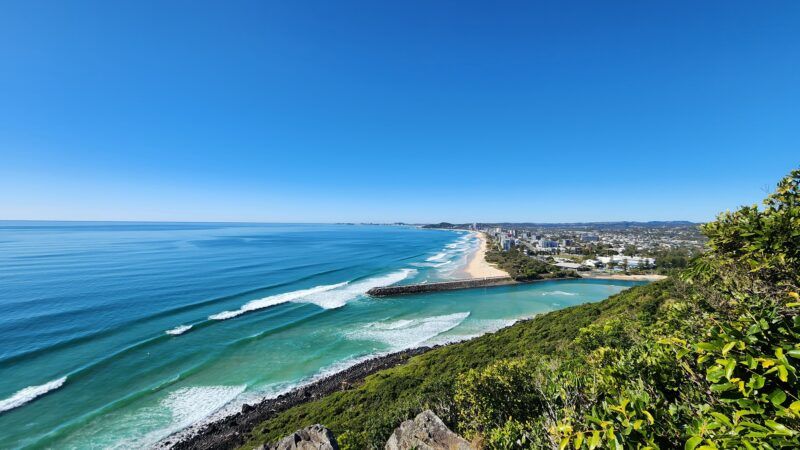
Best beginner-friendly areas include:
- Noosa/Noosa First Point
- Caloundra beaches
- Coolangatta’s protected corners
- Dicky Beach
- Alexandra Headland
- Rainbow Bay on small days
Lessons range AU$60–120 and board rentals AU$20–40/day depending on the region.
Safety and Etiquette: Queensland Government Guidelines

- Gold Coast is competitive — follow etiquette strictly
- Beware rips on Sunshine Coast beaches
- Stingers in tropical regions (north QLD) during summer
- Crowded point breaks require patience
- Stay clear of rocks in Burleigh, Noosa, and Snapper
- Watch for fatigue — points are long
Surf and Yoga Retreats
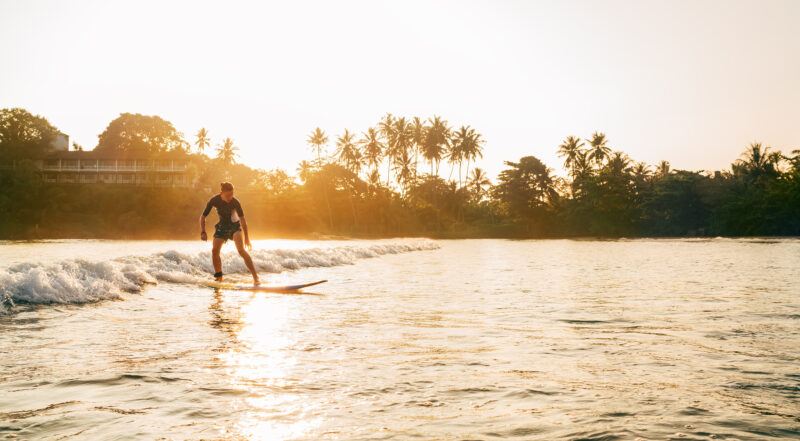
Found in:
- Noosa
- Burleigh Heads
- Sunshine Coast hinterland
- Tweed border
- Retreat-style camps near Double Island Point
Most packages include surf coaching, yoga, meals, accommodation, and transport. Prices range AU$900–2,800 per week.
Accommodation Options for Surfers
Gold Coast: AU$80–500/night
Sunshine Coast: AU$70–400/night
Noosa: AU0–600/night
Fraser Coast: AU$60–200/night
Central/North QLD: AU$40–150/night
Comparison to Other Surf Destinations
Queensland is home to one of the world’s most renowned surf destinations and is Australia’s warm-water surf paradise — more user-friendly than Western Australia, more perfect than NSW beaches on small days, and more consistent for long rights than almost anywhere on Earth. Bali has the barrels, Hawaii has the power, but Queensland stands out among the world’s top surf regions for its everyday perfection and welcoming lifestyle that draws surfers back year after year.
Expenses (AUD)
Accommodation: AU$60–500/night
Food: AU$15–30 per meal
Rental car: AU$60–100/day
Board rental: AU$20–40/day
Lessons: AU$60–120
Cultural Notes
Queensland surf culture is laid-back, sunny, welcoming, and heavily influenced by grom culture, beach lifestyle, and longboard roots. Locals love early starts, beach barbecues, sundowners, and sharing waves with friends and family. Respect the beach, smile, and you’ll fit in.
Aboriginal culture has also played an important role in shaping the unique surf regions of Queensland, and its influence can still be felt today.
Cell Coverage and Wi-Fi
Excellent on the Gold Coast and Sunshine Coast. Moderate in remote regions like Double Island Point. Weak in far-north and national park areas.
Final Thoughts
Queensland is a dream surf destination — long point breaks, warm water, beautiful beaches, world-famous waves, and a surfing lifestyle that feels easy, sunny, and addictive. From the flawless lines of the Superbank to the dreamy points of Noosa and the hidden tropical novelty waves up north, Queensland offers something for everyone.
The development and growth of Queensland’s surf culture and infrastructure have been remarkable throughout the 20th century, with significant expansion during the late 20th century and into the 21st century. Population growth, especially in coastal regions, has driven the construction of new surf facilities and the hosting of major surf events. According to the Australian Bureau of Statistics, Queensland has seen a steady increase in both population and surf participation rates over recent decades. The Queensland Government has actively supported the development of surf infrastructure and the promotion of surfing events, helping to cement the state’s reputation as a global surf destination. Queensland is also home to a vibrant New Zealand surf community, contributing to the region’s diverse and international surf scene.
It’s a place where beginners can take their first steps on a longboard, intermediates can progress quickly on playful walls, and advanced surfers can score world-class barrels during cyclone season. It’s friendly, fun, safe, scenic, and easy to explore — the perfect balance between high-performance surf and relaxed coastal living.
No matter how many times you visit, Queensland always leaves you wanting more.