

Overview of surfing in Pacific Ocean

The Pacific Ocean is the beating heart of global surf culture. Stretching across thousands of kilometres and dotted with islands, atolls, and coastlines, it is home to some of the most iconic waves on the planet. From Hawaii’s North Shore barrels to Fiji’s pristine reef passes, Tahiti’s deadly slabs, and Australia’s golden points, the Pacific is both a proving ground and a paradise.
Surfing here carries history. Ancient Hawaiians were among the first to ride waves, making the Pacific the birthplace of surfing itself. Today, the ocean delivers a mix of legendary destinations and hidden gems. The vibe ranges from heavy, intimidating big-wave spots to mellow tropical longboard breaks.

The Pacific isn’t just about waves—it’s about lifestyle. Tropical islands, Polynesian culture, volcanoes, palm-lined coasts, and ocean traditions combine to create a surf experience unlike anywhere else. Costs vary dramatically—from high-end resorts in Tahiti and Fiji to backpacker-friendly surf towns in Central America and New Zealand. But no matter your budget, the Pacific Ocean is where surfing’s soul beats loudest.
Surf Regions in the Pacific Ocean
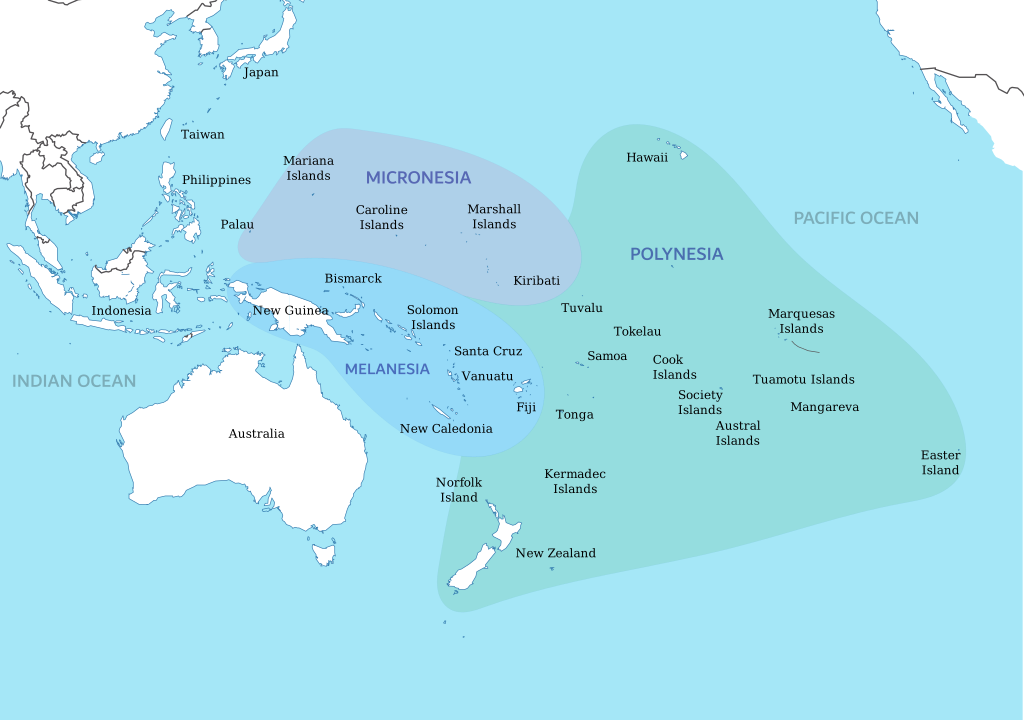
Hawaii

Hawaii is the epicentre of modern surfing. Oʻahu’s North Shore is the mecca, with Pipeline, Sunset, and Waimea Bay forming the Triple Crown. Pipeline is the heaviest barrel in the world, Sunset is a powerful arena for big walls, and Waimea is historic as the birthplace of big-wave surfing. Beyond Oʻahu, Maui has Peʻahi (Jaws), one of the most terrifying big waves on earth, while Kauaʻi and the Big Island offer uncrowded reefs and points, many of which are formed by coral reefs that create the foundation for Hawaii’s famous surf breaks. Hawaii’s surf culture is deeply rooted, blending Polynesian tradition with modern performance surfing.
Tahiti (French Polynesia)
Tahiti is famous for Teahupoʻo, one of the heaviest waves on the planet. This left-hand reef slab is shallow, powerful, and unforgiving, producing thick barrels that look impossible to survive. The south coast of Tahiti is a key area for surfing, offering a variety of surf spots and beaches that cater to different skill levels and preferences. Beyond Teahupoʻo, French Polynesia is scattered with reef passes that deliver perfection for advanced and intermediate surfers alike. Tahiti is renowned for its epic waves, attracting surfers from around the world. The scenery is postcard-perfect: turquoise water, pristine beaches, jungle peaks, and overwater bungalows, making Tahiti a true paradise for surfers.
Fiji
Fiji’s reef passes are the stuff of dreams. Cloudbreak is world-renowned: a long, powerful left that delivers barrels, carves, and challenges at every level. Tavarua Island is also recognized as a world-class surf destination, drawing surfers from around the globe. Restaurants is another standout, a sharp, hollow left that runs fast over shallow reef. The Mamanuca Islands are home to luxury resorts such as Six Senses and Senses Fiji, which offer premium amenities and tailored surfing experiences. These islands also feature surf resorts and surf charters, providing access to remote breaks with year-round warm water and consistent swell from the South Pacific. Fiji is known for its perfect waves and pristine waves, attracting surfers seeking high-quality conditions. The Fijian vibe is welcoming and relaxed, with a deep respect for the ocean woven into daily life. Many resorts cater to the whole family, offering activities and accommodations suitable for all ages. When surfing in Fiji, it’s important to respect marine life and the local ecosystem to help preserve these incredible surf spots for future generations.
Australia (Pacific Coast)

Australia’s extensive Pacific coastline offers a remarkable diversity of surf breaks, making it a prime destination for surfers. While Australia spans both the Pacific and Indian Oceans, the east coast faces the Pacific and is stacked with world-class surf. The Gold Coast is iconic, with Superbank delivering some of the longest right-hand barrels on the planet. Australia is home to many popular surf spots along its coastline, attracting surfers from around the world for a memorable experience. Sydney and New South Wales are full of beach breaks, reefs, and points, while further south, Bells Beach in Victoria is a legendary right-hander. Australia is highly developed, with surf ingrained in daily life.
New Zealand

New Zealand’s Pacific-facing coastlines are blessed with variety. Raglan on the North Island is world-famous for its left-hand points that run forever, while Piha delivers punchy beach breaks close to Auckland. The South Island has colder, more rugged surf with dramatic backdrops of mountains and fjords, and is renowned for its untouched natural beauty and pristine environment. New Zealand’s surf scene blends outdoor adventure—hiking, skiing, camping—with uncrowded, consistent surf.
Papua New Guinea

Papua New Guinea remains one of the Pacific’s last frontiers. Its reefs and points are still largely uncrowded, with surf tourism carefully managed through local communities. The waves are playful and fun, ranging from mellow reefs to hollow breaks, with warm water year-round. Regions like New Ireland and the Solomon Islands are influenced by unique ocean currents and swell direction, which affect local surf conditions and the quality of the waves. PNG surf trips are as much about cultural immersion and discovery as about scoring waves.
Micronesia (Guam, Palau, Yap, Pohnpei)

The scattered islands of Micronesia offer pristine reef passes with world-class surf and almost no crowds. P-Pass (Pohnpei) is the standout—a powerful right-hand reef break with mechanical perfection. These islands are remote and adventurous, with crystal-clear water and vibrant island cultures.
The Marshall Islands are another remote destination in Micronesia, accessible via surf charter, offering pristine and untouched waves for those seeking a customized and all-inclusive surfing experience.
Central America’s Pacific Coast

While technically outside the islands, the eastern Pacific coasts of Costa Rica, Nicaragua, and El Salvador are considered part of the greater Pacific surf zone. Endless beach breaks, consistent year-round swell, and affordable surf towns make them favourites for travellers. El Salvador’s right-hand points like Punta Roca are legendary, while Nicaragua’s offshore winds create daily perfection.
Some beaches along this coast are also suitable for body surfing, offering options for those interested in different water activities.
21 Best Surf Resorts and Camps in Pacific Ocean


Getting there

Hawaii is easily accessed via Honolulu International Airport, with connections from the U.S., Asia, and Oceania. Tahiti’s Faaʻa International Airport connects to Los Angeles, Auckland, and Paris. Fiji’s Nadi International is the hub for surf resorts and charters. Australia’s Pacific coast is served by Sydney, Brisbane, and Melbourne, while New Zealand’s Auckland International connects globally. Micronesia and Papua New Guinea require more complex travel, often via Guam or Manila.
Once there, surf travel is often boat-based. Fiji, Tahiti, and Micronesia rely heavily on boats to reach reef passes. Surf charters and travel packages provide access to remote and exclusive surf spots, making for a memorable surf trip. In Hawaii, scooters or rental cars are the norm. New Zealand and Australia demand road trips—part of the surf lifestyle.
Crowds
Hawaii’s North Shore is famously crowded during winter, with lineups stacked with locals and pros. These lineups often attract experienced surfers and more experienced surfers seeking challenging waves. Tahiti’s Teahupoʻo sees smaller numbers due to its danger, but it’s rarely empty. Fiji’s resorts limit crowds, though popular breaks can get busy. Australia’s Gold Coast is extremely crowded, but New Zealand, PNG, and Micronesia offer solitude and discovery.
Lineup Lowdown
The Pacific is home to strict surf etiquette. Hawaii’s localism is legendary—respect the pecking order and don’t paddle straight to the peak. In Tahiti and Fiji, locals welcome respectful visitors but expect courtesy. Australia and New Zealand have busy but generally friendly lineups. In remote Pacific islands, the vibe is warm and welcoming, but surf tourism is carefully managed to protect communities.
Surf spot overview


Surf seasons and when to go
The best time of the year to surf in Pacific Ocean
Surf Seasons & When to Go
-
- Hawaii: November–February (North Shore winter).
- Tahiti: March–October (southern hemisphere swell).
- Fiji: March–October (dry season, consistent swells).
- Australia (east coast): March–September for best consistency.
- New Zealand: Year-round, with bigger swells May–September.
- PNG & Micronesia: November–March (north swells), though many spots work year-round.
- Central America (Pacific): March–October (wet season swells).
The best swells often hit the larger islands first, creating optimal surf conditions during peak seasons.
During the summer months, steady trade winds dominate the tropical Pacific, shaping surf and weather patterns. In contrast, dry winds are more common in the winter months, especially in regions with a strong monsoonal climate.
Water Temperatures & Weather
-
- Hawaii, Tahiti, Fiji, PNG, Micronesia: 25–28°C, boardshorts/bikinis.
- Australia & New Zealand: 18–24°C in summer, 10–16°C in winter (full wetsuits needed in the south).
- Central America (Pacific): 26–29°C, boardshorts year-round.
The Pacific’s weather varies from tropical humidity in Fiji and Tahiti to chilly winters in New Zealand. Cyclones and storms are part of the surf calendar, bringing swell but also danger.
As the deepest ocean, the Pacific’s vast depth, along with its size, plays a key role in shaping its unique weather and surf patterns.
The Pacific’s weather varies from tropical humidity in Fiji and Tahiti to chilly winters in New Zealand. Cyclones and storms, including tropical cyclones, are part of the surf calendar, bringing swell but also danger. Westerly winds are another significant weather phenomenon, influencing seasonal climate and surf conditions across the region. Persistent fog can also be a navigation hazard, especially in the northern Pacific.
Can’t-Miss Surf Spots
Pipeline (Oʻahu, Hawaii)
Pipeline is one of the most famous surf breaks in the world and the ultimate proving ground. Every winter, powerful North Pacific swells slam into Oʻahu’s shallow reef, creating thick, hollow barrels just metres from shore. It’s a gladiator arena where the best surfers test their limits and reputations are made—or broken. The lineup is fiercely local and extremely competitive, but even watching from the sand is unforgettable. Pipeline is the heartbeat of Hawaiian surf culture.
Teahupoʻo (Tahiti)
Teahupoʻo is one of the heaviest, most dangerous waves ever surfed. The reef is razor-sharp, the barrels are as thick as they are tall, and the consequences of a wipeout are brutal. Despite its fearsome reputation, it’s also one of the most beautiful waves on earth: crystal-clear water, lush Tahitian peaks, and a channel where boats float just metres from the action. Teahupoʻo is strictly for advanced surfers, requiring a high level of skill and experience to handle its challenging reef break and powerful waves.
Cloudbreak (Fiji)
Cloudbreak is a jewel of the South Pacific. Breaking over a sharp reef, it offers long, powerful lefts with multiple sections—open faces for carving, hollow barrels for chargers, and playful shoulders for intermediates on smaller days. Surfers seeking powerful, challenging waves and unforgettable experiences are especially drawn to Cloudbreak. It’s remarkably consistent and works at all sizes, from overhead fun waves to 20-foot monsters. Accessible by boat from surf resorts, Cloudbreak has earned its place as one of the best waves on the planet.
Raglan (New Zealand)
Raglan is New Zealand’s surf crown, famous for its long, peeling left-hand points. The three main breaks—Indicators, Whale Bay, and Manu Bay—can link up for rides lasting over a kilometre. Raglan is friendly for intermediates on small days but transforms into a world-class performance wave when big. The town itself is laid-back, full of surf cafés, live music, and outdoor adventures, making it the perfect Kiwi surf destination.
Superbank (Gold Coast, Australia)
The Superbank is a sandbank miracle that creates one of the longest right-hand waves in the world. The unique interaction between the shifting sandbank and the underlying sea floor shapes the wave’s consistency and quality, producing those famously long, hollow rides. On its best days, surfers can ride from Snapper Rocks through Greenmount, Rainbow Bay, and all the way to Kirra, threading barrels for hundreds of metres. It’s fast, hollow, and crowded—paddling into position feels like joining a moving highway—but when you lock into a section, the wave is pure magic.
P-Pass (Pohnpei, Micronesia)
P-Pass is a remote Pacific gem and world-class surf spot, offering one of the most perfect right-hand reef breaks anywhere. The wave is fast, hollow, and powerful, producing long barrels over crystal-clear coral reef. Best in the November–March north swell season, P-Pass is mechanical in its precision and breathtaking in its beauty. Its remote location means fewer crowds, but those who make the journey are rewarded with one of the Pacific’s finest rides.

Pacific Ocean surf travel guide
Find trips that fit a flexible lifestyle
Learning to Surf in the Pacific

Beginners thrive in Waikiki (Hawaii), Byron Bay (Australia), New Zealand’s Piha, and mellow beaches in PNG. Surf schools are abundant, and warm water in many regions makes learning fun. Resorts in Fiji and Tahiti also offer safe learner waves, though costs are higher.
Safety and Etiquette
Pacific surf can be dangerous. Pipeline, Teahupoʻo, Cloudbreak, and Jaws are not for beginners. Reefs are sharp, currents strong, and wipeouts brutal. Always use reef booties if unsure, fall flat on shallow reefs, and respect locals. In places like Hawaii, respect isn’t optional—it’s the foundation of surfing there.
Surf and Yoga Retreats

Fiji and Tahiti lead luxury surf retreats, with villas, yoga decks, and gourmet meals. Some of the best resorts in the region offer exclusive surf and yoga experiences, featuring private villas, overwater bungalows, personalized surfing lessons, and wellness services for high-end travelers. Hawaii has surf-wellness retreats blending Polynesian culture with yoga and fitness. Australia and New Zealand offer eco-lodges and surf-yoga camps in coastal towns. PNG has community-based surf retreats that mix surf with cultural experiences.
Accommodation Options for Surfers
- Hawaii: Hostels AU$50–70, hotels AU$200+, luxury AU$400+.
- Tahiti: Guesthouses AU–150, resorts AU0–600+.
- Fiji: Surf camps AU$100–200, resorts AU$250–500+.
- Australia: Campsites AU, hostels AU–70, hotels AU0+.
- New Zealand: Backpacker lodges AU$30–50, motels AU$80–120, eco-lodges AU$150+.
- PNG & Micronesia: Community lodges AU$60–100, surf camps AU$120+.
- Cook Islands: Guesthouses AU$70–120, boutique hotels AU$150–250, surf lodges AU$100–180.
- Central America (Pacific): Hostels AU$20–40, surf camps AU$60–100.
Comparison to Other Surf Destinations
The Pacific, as the largest division of Earth’s oceanic system, sets the standard. Europe’s France and Portugal may be consistent, but Pipeline, Teahupoʻo, and Cloudbreak are unmatched. Compared to Bali or Sri Lanka, the Pacific is less about affordability and more about raw power and history. Central America offers consistency and affordability, but the Pacific Islands deliver cultural immersion and once-in-a-lifetime waves.
Expenses
- Accommodation: AU$20–600 depending on destination and style.
- Food: AU–20 for local meals in PNG and Central America; AU–80 in Fiji or Tahiti resorts.
- Transport: Rental cars AU–100/day; boat charters in Fiji or Tahiti AU0–400/day.
- Surf Costs: Rentals AU$20–40/day; lessons AU$60–100/session.
Pacific surf trips range from budget road trips in New Zealand and Australia to luxury, once-in-a-lifetime charters in Fiji and Tahiti.
Cultural Notes

- Hawaii and Polynesia: surfing is spiritual, rooted in tradition. Respect is vital.
- Fiji & Tahiti: warm hospitality, but community-based tourism means giving back.
- Australia & New Zealand: surf is ingrained in daily life, laid-back but performance-oriented.
- PNG & Micronesia: local communities manage surf access—support them directly.
The Pacific’s surf cultures are also shaped by their proximity to the Asian landmass, especially in regions like PNG and Micronesia, where seasonal winds and climate patterns influence both the waves and local traditions.
Cell Coverage & Wi-Fi
Coverage is strong in Hawaii, Australia, and New Zealand. Tahiti and Fiji have decent coverage near towns and resorts but patchy service in outer islands. PNG and Micronesia can be limited. Wi-Fi is common at resorts and surf camps, though speed varies.
Final Thoughts

The Pacific Ocean is surfing’s heartland, offering both history and progression. Pipeline remains the world’s ultimate proving ground, Teahupoʻo is the most fearsome barrel, Cloudbreak is mechanical perfection, and Raglan and Superbank deliver endless rides. Add remote gems like P-Pass or PNG’s reefs, and you’ve got a surf region that offers everything from heavy slabs to mellow rollers.
Pack your quiver, bring your respect for local traditions, and prepare for an adventure that blends culture, scenery, and the best waves on earth. Surfing the Pacific is not just a trip—it’s a rite of passage.
The Pacific Ocean, often called the great ocean, is the world’s largest and deepest ocean basin, covering the greatest surface area and containing the highest water volume of any ocean. Its immense size stretches from the Bering Strait and Bering Sea in the north to the southern boundary near South America, and it is home to the deepest point on Earth—Challenger Deep in the Mariana Trench—along with other significant ocean trenches like the Peru Chile Trench. The Pacific basin includes major subdivisions such as the North Pacific Ocean, South Pacific Ocean, northwestern Pacific, and East Pacific, featuring geological landmarks like the East Pacific Rise. Numerous seas and sea regions, including the East Sea, South China Sea, and other marginal seas, form part of its complex structure. The Pacific’s reach and diversity are often compared to the Atlantic Ocean, but the Pacific Ocean is the largest by far.
The Pacific basin’s vast expanse encompasses a range of climatic and geographic differences between its eastern and western regions, as well as between areas at the same latitude in the northern and southern hemispheres. The region is also notable for tropical cyclones that form south of Mexico and in the western Pacific. Explorer Ferdinand Magellan named it the “peaceful sea” during his historic voyage. Today, the Pacific faces significant environmental challenges, including climate change, ocean acidification, plastic pollution, and deep sea mining, all of which impact its ocean waters and marine ecosystems.
